How AI is Transforming Cancer Pathology and Imaging for UK Patients
Table of Contents
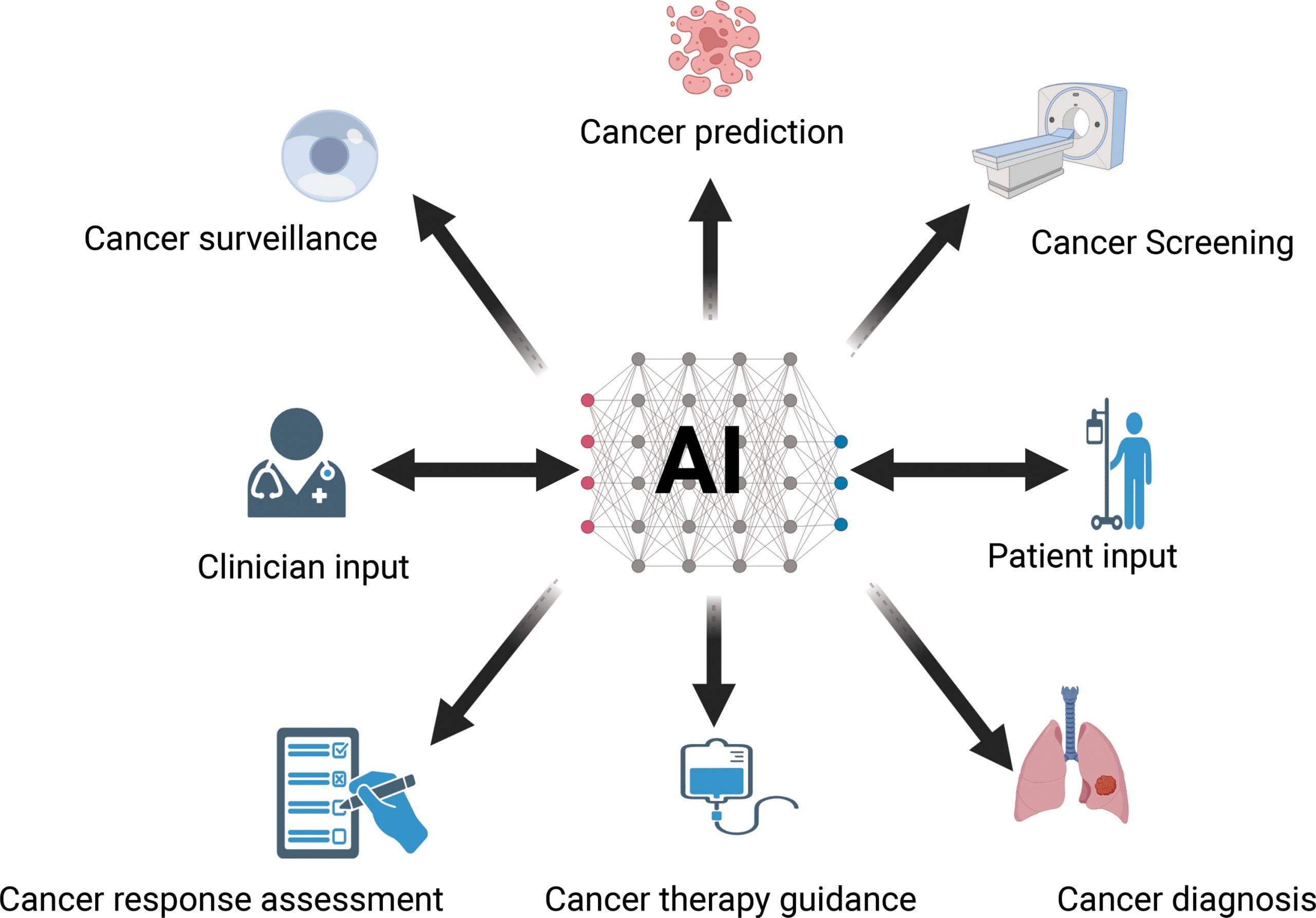
Artificial intelligence (AI) has infiltrated and found use in every aspect of our lives. The health industry, for example, has rapidly advanced its use of AI, eventually finding ways AI can be used in cancer diagnostics and treatment. In the UK, AI-driven systems for cancer screening are already in place and in use and have improved patient care.
The application of AI in cancer treatment has improved patient outcomes and reduced the healthcare burden significantly. Here, we explore how AI is influencing cancer pathology and imaging, the benefits and challenges for UK patients, and how you can find AI-driven cancer services near you.

The Role of AI in Cancer Pathology
Pathology is the analysis of tissue samples to find any disease. This step is critical and central in every cancer diagnosis. Normally, pathology involves manual analysis of obtained tissue samples in order to find any abnormalities. However, with the introduction of AI, the efficiency of this process has increased with the higher precision.
AI uses advanced algorithms and finds patterns and anomalies that may be overlooked by doctors. This stems from analysis of thousands of samples that help it learn to spot even the most miniscule details.
Various institutions like Cancer Research UK and The Royal Marsden NKHS Foundation Trust have already incorporated AI in their workflow. Institutions like Addenbrooke have a specialised AI called OSAIRIS specialised for the diagnosis of prostate, head, and neck cancers.
The efficiency in the pathology process is improved due to the higher precision as well as the reduction of time spent, hence ensuring that patients can progress with their treatment plan at a faster rate.

Use of Artificial Intelligence in Cancer Imaging
Similarly, AI can be used for medical imaging by analysing CT, PET, and MRI scans. AI is suited for finding small tumors and any tissue changes that cannot be identified by the human eye. Doctors believe that AI can be used as a tool that decreases their work as it can analyse vast data sets, shorten the waiting period for results, and improve the accuracy of the results.
With previous success with the NHS-approved Brainomix e-Stroke AI that is used for analysis of brain scans of stroke patients, the use of AI for cancer imaging has been endorsed by various research institutions and the NHS. The NHS is currently working in collaboration with various AI technology providers for the establishment of AI imaging systems for cancer cases.
A recent study by the NHS launched an AI tool referred to as Mia, which was programmed to detect breast cancer. The AI tool was able to identify 11 cases that escaped the human doctor’s detection.

Personalised Treatment Plans with AI
Personalised care is a niche in the medical industry that is difficult to achieve but highly effective for all patients. AI allows for this to be a possibility with generative AI being able to predict how a patient will react to various treatment plans based on their imaging and pathology results.
Therefore, doctors can choose the best treatment plan, enhancing effectiveness and lowering the side effects. UK cancer centers, like the Christie NHS Foundation Trust, are actively exploring AI in precision medicine.
Navigating AI-Driven Cancer Care in the UK
For UK patients interested in AI-assisted cancer diagnosis and treatment, various institutions offer these services.
An appointment with your GP or oncologist is advised prior to visiting these centres for an analysis of your condition and an overview of the impact an AI-driven assessment would have. That said, the following UK cancer centers use AI into their cancer imaging and pathology workflows:
- Leeds Teaching Hospitals
- Addenbrooke’s Hospital, Cambridge
- University College London Hospitals
- The Royal Marsden NHS Foundation Trust
- The Imperial College Healthcare NHS Trust
- Christie NHS Foundation Trust
- Oxford University Hospitals NHS Foundation Trust
- Guy’s and St Thomas’ NHS Foundation Trust
- Barts Health NHS Trust
- Queen’s University Belfast
- Royal Free London NHS Foundation Trust
Various other NHS hospitals have been awarded grants to allow them to be equipped with these tools as research continues, and in the near future AI will be used to improve patient outcomes in every single institution.
The Future of AI in Cancer Diagnostics
The field is still young and is subject to increasing funding from the government for continued research for the development of better AI tools. One such prospect is the use of AI for precision imaging, subverting the need for invasive procedures for the retrieval of tissue biopsies.
Virtual biopsy is already under study for the diagnosis of lung cancer, with prospects of extending its usage to the detection of other cancers.
Ongoing partnerships between the NHS and various AI companies, most notably Microsoft, set a bright outlook for cancer diagnostics in the UK.
Better AI technology may lead to 3D imaging, real-time diagnostics, and even virtual pathology, and more widespread usage of these tools will increase accessibility of services to all patients.
Challenges and Limitations
While there are many benefits to incorporating AI in the medical field, certain challenges have come up. Key among them is the learning need that all AI tools have that collides with the need for patient privacy and data security. Secondly, research and establishment of AI tools in all hospitals is a costly undertaking for the NHS. Regulations and legislation will also be needed to ensure that AI is used ethically.
These legislations will also be needed to ensure that the standards of the AI tools used are up to par and suitable for all demographics.
Helpful UK Cancer Support Resources
Whether you’re navigating a new cancer diagnosis or supporting a loved one, these UK-based resources provide valuable assistance:
Macmillan Cancer Support – Offers advice, financial assistance, and emotional support for cancer patients and families.
Cancer Research UK – Provides information on cancer types, treatment options, and research news.
NHS Cancer Support Services – Comprehensive support services for patients across the UK, including access to local and regional cancer centers.
Leave a Reply to Cancer Patients in the UK: 7 Essential Insights Cancel reply